When Watts Lie: Rethinking Your Power Numbers After Training in Baku
You've got a power meter. You trust it. You've built entire training blocks around it, argued with your coach about it, and probably stared at it mid-climb when you wanted to quit. For most American cyclists, the wattage number is gospel.
Then you go to Baku, and suddenly the gospel gets a little complicated.
Cyclists who've trained here — on the wind-swept coastal roads hugging the Caspian, through the rolling terrain outside the city, or during structured efforts at local velodromes — consistently report something strange when they get back home: their numbers look different, but they feel different too. And not always in the ways you'd expect.
So what's actually going on?
The Environment Is a Variable Your Power Meter Ignores
Here's the thing about power output: it measures what your legs are producing at the crank. Full stop. It doesn't measure heat. It doesn't measure humidity. It doesn't measure the psychological weight of racing in a foreign country against riders from a dozen different nations. And it definitely doesn't account for the atmospheric conditions along the Absheron Peninsula.
Baku sits at roughly sea level, which is a relief for American cyclists coming from places like Denver or Boulder where altitude already messes with their baseline. But the city's climate — hot and semi-arid in summer, surprisingly windy year-round thanks to its geography on the Caspian coast — creates a training environment that demands a lot from your cardiovascular system without necessarily showing up in raw wattage.
When you're pushing 280 watts into a headwind at 35°C, your body is doing significantly more work than that number reflects. Core temperature management, sweat rate, cardiovascular strain — none of that shows up in the file you upload to TrainingPeaks afterward.
The result? Cyclists often underestimate how hard they actually worked in Baku. And when they get home to cooler, calmer conditions and suddenly hit 295 watts on a climb that used to cap them at 275, they're confused. They shouldn't be.
The Psychological Amplifier Nobody Talks About
Beyond the physiology, there's a mental dimension to training in Baku that genuinely affects performance data — and most cyclists never think to account for it.
Racing or training alongside riders from Central Asia, Eastern Europe, and the broader international community that gravitates toward Baku's cycling scene creates a level of competitive arousal that's hard to replicate back home. American cyclists, especially those used to regional crits or club rides where they know exactly where they stand in the pecking order, often describe a heightened sense of focus and urgency during Baku sessions.
That arousal state has a measurable effect on power output. Studies on competitive motivation consistently show that riders push harder — sometimes 5 to 8 percent harder — when racing against unfamiliar competition they perceive as capable. In Baku, everyone is unfamiliar. The playing field feels wide open, and that uncertainty is actually a performance enhancer.
The flip side? When those same riders return to their home training groups, the psychological ceiling can drop back down. Same legs, same lungs, lower perceived stakes. The watts reflect that deflation even if the fitness hasn't actually changed.
How to Recalibrate After a Baku Block
So you've spent two or three weeks training in Azerbaijan, your legs feel incredible, and you're back in Chicago or Portland staring at power numbers that seem inconsistent with how fit you feel. Here's a practical framework for making sense of it all.
Give yourself a full retest at 10 days out. The first week back is noisy data. Travel fatigue, time zone adjustment, and the psychological comedown from an intense training environment all suppress power output temporarily. Don't draw conclusions from that first week's numbers.
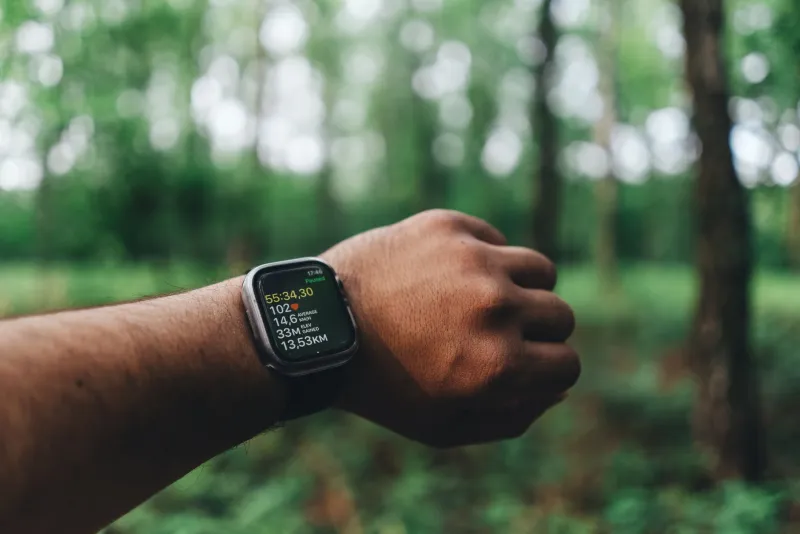
Compare effort-to-power ratios, not raw watts. Pull your heart rate alongside power from your Baku sessions and compare them to equivalent efforts at home. If you were producing 260 watts at 158 bpm in Baku's heat and you're now hitting 275 watts at the same heart rate in 65°F weather, that's genuine fitness gain — the environment was masking it the whole time.
Adjust your FTP test protocol contextually. If you tested your FTP in Baku and used it to set training zones, understand that those zones may be slightly conservative for cooler conditions back home. A recalibration test within two weeks of returning is worth the effort, especially before any important target races.
Log environmental data alongside your rides. Temperature, humidity, and wind speed are just as important as elevation when you're trying to normalize power data across different training locations. Apps like Strava and Garmin Connect capture some of this automatically — make sure you're actually looking at it.
The Bigger Picture: Watts as One Signal Among Many
The broader lesson Baku teaches American cyclists isn't really about power at all. It's about the limits of single-metric thinking.
US cycling culture is deeply wired around quantification. FTP, TSS, CTL, ATL — we love our acronyms and our dashboards. That's not inherently bad, but it can create a kind of tunnel vision where a number that looks flat gets interpreted as stagnation, even when the athlete is clearly getting stronger.
Baku disrupts that tunnel vision in a useful way. When you're navigating an unfamiliar city, racing on roads you've never seen, managing heat and wind and a body clock that's eight or nine hours off from home — you stop obsessing over the number and start riding by feel. You reconnect with the sensory feedback loop that power meters were always supposed to supplement, not replace.
A lot of riders come back from Baku describing a renewed trust in their own perceived exertion. They're not less data-driven, but they're more nuanced about what the data actually means.
Silk Road Lessons for the Data-Obsessed Rider
The Silk Road was never just one road. It was a network — constantly shifting, context-dependent, shaped by the terrain and conditions of wherever the trader happened to be standing. Your power data works the same way.
280 watts in Baku's summer heat is not the same as 280 watts on a perfect 65°F morning in California. The number is identical. The physiological cost is not. And the fitness you built pushing through that heat, that wind, that unfamiliar competitive pressure? That is showing up — just maybe not in the column you're used to looking at.
Ride smarter. Race harder. And the next time your power file looks confusing after a Baku training block, consider that the confusion itself might be the most valuable data point of all.