Racing Against the World: How Baku's International Field Unlocks American Cyclists' Hidden Ceiling
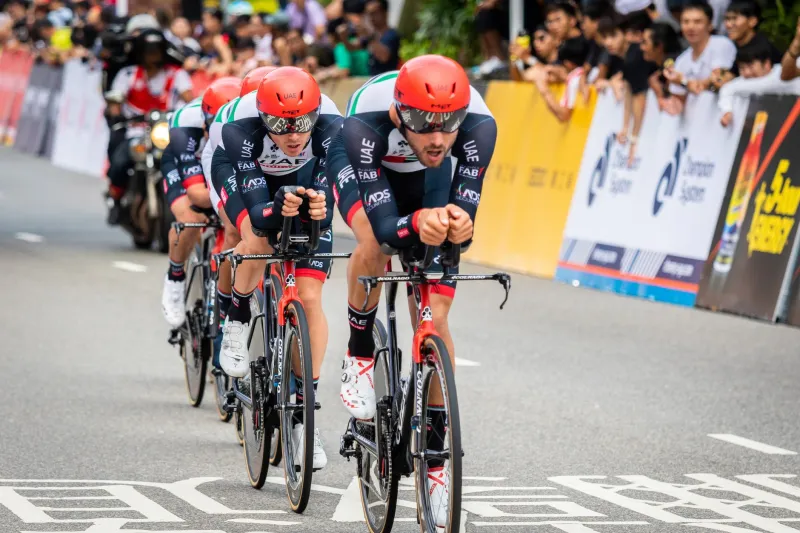
There's a moment every American cyclist who's raced in Baku describes almost identically. You're in the bunch, maybe 20 kilometers into a stage, and you realize the rider on your wheel isn't from Colorado or California. He's from Kazakhstan. The one pushing tempo on your left? She trains in the Dolomites. The guy who just launched an attack off the front? He grew up riding mountain roads in South Korea.
That moment — that sudden, electric awareness that the field is genuinely global — changes something in how you race. And according to a growing chorus of US cyclists who've made the trip to Azerbaijan, it changes something permanently.
The Comfortable Ceiling Problem
Domestic racing in the United States is excellent. The talent pool is deep, the events are well-organized, and the competition is real. But there's a ceiling effect that most American racers don't talk about openly: when you consistently race against the same pool of competitors, you unconsciously calibrate your effort to that pool.
Sports psychologists call it competitive anchoring — your brain sets its internal benchmark based on the opposition it knows. You know which riders will go hard in the final climb. You know who fades in the heat. You know the moves before they happen. That familiarity is strategically useful, but it's also a limiter. You stop discovering what you're actually capable of because you stop needing to find out.
Baku dismantles that ceiling in about the first 10 kilometers.
A Starting Grid Unlike Anything in the US
The cycling ecosystem in Baku draws competitors from across Europe, Central Asia, the Caucasus region, and East Asia — all bringing racing styles shaped by completely different training cultures, road conditions, and tactical traditions. European riders often bring a deeply disciplined peloton mentality. Central Asian cyclists tend to be extraordinarily strong climbers with a high tolerance for sustained suffering. East Asian competitors frequently excel in technical descents and precision pack riding.
For American cyclists accustomed to a relatively homogenous domestic field, this is a full sensory overload — in the best possible way.
"I thought I knew how to read a race," said one US amateur racer who competed in Baku last year. "Then I got completely caught off guard by an attack style I'd never seen before. A rider from Uzbekistan just... sat at the front and ground everyone down for 40 minutes straight. No surges, no drama. Just relentless, metronomic pressure. I had no answer for it. But I learned more about my own limits in that one stage than in a full domestic season."
Why International Exposure Produces Measurable Gains
This isn't just anecdote. The performance science behind competitive diversity is well-established. When athletes face unfamiliar opponents with different strengths, they're forced to recruit physical and cognitive resources they don't typically access in familiar competitive environments.
In practical terms: you dig deeper. You make faster decisions. You adapt your tactics in real time rather than running a familiar script. And crucially, you discover physical reserves you didn't know existed because the competition demanded them.
The physiological response to genuine competitive uncertainty — not knowing exactly what the field will do — triggers elevated hormonal output, sharper focus, and a measurably higher sustained power output compared to races where the competitive landscape feels predictable.
Baku's international fields create that uncertainty by default. Every race is a puzzle you haven't solved before.
The Tactical Education You Can't Get Stateside
Beyond the raw physical demands, racing internationally in Baku delivers something that no training plan can replicate: tactical diversity education.
Different cycling cultures have genuinely different approaches to race strategy. French and Belgian riders often treat the peloton as a collaborative unit until the final decisive moments. Riders from mountainous Central Asian regions are comfortable with long, grinding breakaways that would be considered tactically wasteful in a typical US criterium. Japanese and Korean competitors sometimes show an almost chess-like patience, conserving energy deep into a race before striking with precision.
American cyclists who absorb these varied approaches don't just become more culturally aware — they become more tactically complete. They return home with a broader strategic vocabulary. They know how to respond to moves they'd never encountered before, because they've now encountered them.
"It's like learning a new language," explained a competitive cyclist from Denver who's made the Baku trip twice. "Once you've raced against that level of international variety, you see the same moves happening in domestic races, just at a different intensity. You recognize the setup earlier. You respond better. It's a massive advantage."
The Confidence Transfer Back Home
Here's where the Baku effect gets genuinely interesting: the performance gains don't stay in Azerbaijan.
Cyclists who've pushed through the discomfort of racing against an international field — who've dug into reserves they didn't know they had, who've adapted to unfamiliar tactics in real time — come home with a recalibrated sense of what they're capable of. The domestic field that once felt like a ceiling now feels like a familiar training ground.
This isn't arrogance. It's recalibration. Your internal benchmark has shifted upward because you've now measured yourself against a genuinely global standard. And that shift tends to be sticky. Riders report sustained performance improvements across multiple subsequent domestic seasons after a Baku racing experience.
The competitive confidence that comes from surviving — and sometimes thriving — against international elite competition is arguably the most durable performance enhancement available to an American cyclist. It can't be faked, can't be simulated on a trainer, and can't be purchased with better equipment.
How to Make the Most of It
If you're planning your first Baku racing experience, a few things will help you extract maximum competitive value from the international field:
Study the field before you race. Research the racing cultures represented in your event. Understanding that Central Asian climbers tend to go long and early, for example, means you won't be caught flat-footed when it happens.
Race to learn, not just to place. Especially in your first international event, treat every stage as a tactical classroom. The goal isn't just the result — it's the competitive education.
Debrief honestly after each stage. Where were you caught off guard? What moves did you not see coming? What physical demands exceeded your expectations? These gaps are your training roadmap.
Give yourself time to process. The performance transfer from international racing to domestic competition isn't always immediate. It often reveals itself across the weeks and months following your return — sometimes in ways that surprise you.
The Silk Road Raises the Bar
There's a reason Baku has become a genuine destination for serious American cyclists, and it goes beyond the roads, the weather, or the logistics. It's the competition. The honest, humbling, illuminating experience of lining up against the world and discovering that the world is both formidable and beatable.
The Silk Road has always been a place where cultures collide and exchange. In Baku, that collision happens on two wheels — and American cyclists are coming home richer for it, one international start line at a time.