Sleep Deep, Race Hard: What Baku Is Doing to American Cyclists' Recovery Game
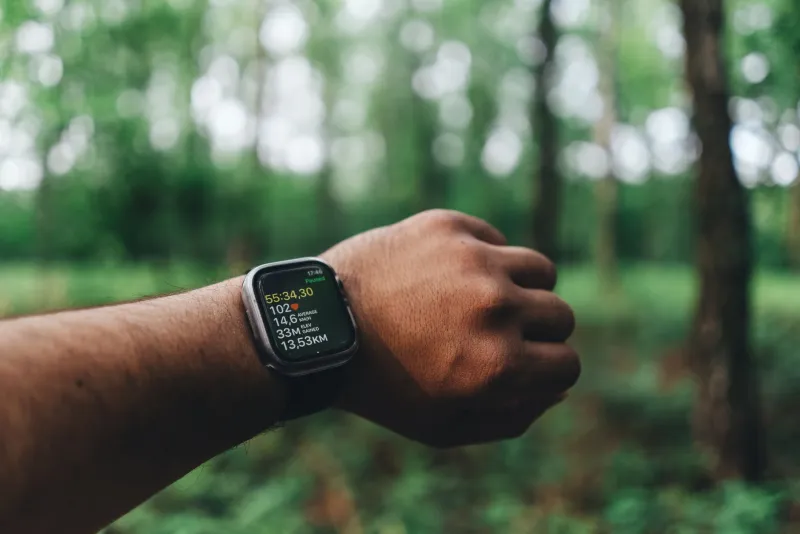
You travel halfway around the world expecting sore legs and jet lag. What you don't expect is to wake up after eight hours of dead-still sleep, check your Garmin, and see a resting heart rate that belongs to someone five years younger and ten pounds lighter. But that's exactly what keeps happening to American cyclists who spend time training in Baku — and the sports science community is starting to pay close attention.
Recovery is the unsexy half of performance. Everyone wants to talk about the intervals, the power numbers, the race tactics. But the athletes who consistently improve are the ones who've figured out how to absorb training stress and come back stronger. And increasingly, Baku is proving to be an unexpectedly powerful classroom for exactly that.
The Altitude Factor Nobody's Talking About
Baku sits at a relatively modest elevation compared to classic altitude training destinations like Colorado Springs or the Swiss Alps. But that's actually part of why it works so well for recovery-focused training blocks. Dr. Mara Lindqvist, a sports physiologist who has worked with several US national-level cyclists, explains it this way: "You're high enough to stimulate mild erythropoietic adaptation — your body starts producing red blood cells more efficiently — but you're not so high that sleep quality tanks. A lot of athletes go to extreme altitude and actually sleep terribly for the first two weeks. Baku tends to avoid that problem entirely."
The result is a kind of sweet spot. Riders are getting a gentle hematological nudge without the disrupted sleep architecture that plagues high-altitude camps. REM cycles stay intact. Deep sleep stages remain productive. And heart rate variability — one of the most reliable markers of recovery quality — tends to trend upward within the first week.
What the Wearables Are Actually Showing
Talk to enough US cyclists who've done stints in Baku and a pattern emerges. The numbers on their recovery trackers shift in ways that are hard to dismiss as coincidence.
Jamie Ostrowski, a Cat 1 road racer from Portland, Oregon, spent three weeks training in Baku ahead of a late-season criterium series. "I've been obsessive about my Whoop data for two years," he says. "In Baku, my recovery scores were consistently in the green by day five. Back home, I'm lucky to hit green twice a week during a hard training block. It was genuinely weird to see."
His HRV average climbed from a baseline of 52 milliseconds to 71 milliseconds over the course of the trip. His resting heart rate dropped four beats per minute. And perhaps most telling — his sleep consistency score, which measures how regularly he hit the same sleep and wake times, improved dramatically. "I think part of it was just that I wasn't on my phone at midnight," he laughs. "But there was something else going on too."
Sports sleep specialist Dr. Kevin Farrow, who consults with endurance athletes across the US, isn't surprised. "When athletes are in a new environment with structured purpose — they're there to train, they're away from their normal stressors, they're following a schedule — sleep architecture often improves significantly. Add in the climate variables of a place like Baku and you've got a genuinely favorable recovery environment."
The Climate Connection
Baku's climate is legitimately unusual. The Caspian coast creates a microclimate that cycles through warm, dry days and noticeably cooler nights — a temperature swing that turns out to be pretty ideal for sleep onset. Core body temperature needs to drop to initiate quality sleep, and environments that cool down meaningfully in the evening hours give that process a natural assist.
Beyond temperature, the air quality and reduced humidity at certain times of year mean riders aren't fighting the kind of respiratory friction that plagues training in, say, Atlanta or Houston summers. Breathing is easier at rest. Heart rate comes down faster post-ride. The parasympathetic nervous system — the rest-and-digest branch that governs recovery — gets more airtime.
"There's a reason elite endurance athletes from around the world have started using Baku as a training base," says Dr. Lindqvist. "It's not just the roads or the race culture. The environment itself is physiologically permissive for adaptation."
The Cultural Reset Is Real Too
Here's something the data doesn't fully capture: Baku has a cycling culture that operates at a different pace than what most American riders are used to. Post-ride recovery isn't an afterthought — it's embedded in the rhythm of the day. Long meals with other athletes. Afternoon rest built into the schedule. Social connection that's genuinely low-key rather than performative.
"Americans tend to feel guilty about rest," says Farrow. "We're wired to equate more with better. Being in an environment where the culture actually supports slowing down — where a two-hour lunch after a hard ride is just normal — that has a measurable effect on cortisol levels and recovery quality."
Ostrowski echoes this. "Nobody in Baku is grinding through their phone while eating. Nobody's talking about their Strava segments at dinner. You just kind of decompress. And I genuinely think that had as much to do with my recovery numbers as anything else."
Tactics You Can Take Home
You don't need a plane ticket to Azerbaijan to borrow from Baku's recovery playbook. Here are the principles worth implementing now:
Protect your sleep environment temperature. Aim for a bedroom between 65–68°F. If your nights are warm, a cooling mattress pad is worth the investment.
Build a real post-ride wind-down. Not a scroll session, not a podcast while checking email — an actual parasympathetic trigger. Think: light stretching, a warm (not hot) shower, a meal eaten without screens.
Track HRV consistently, not occasionally. Tools like Whoop, Garmin Body Battery, or the Oura Ring give you actionable data only when you've established a baseline. Commit to 30 days of consistent logging.
Reduce decision fatigue during training blocks. One reason Baku works is that athletes are in a structured environment where they don't have to make a hundred small choices every day. Meal prep, consistent sleep times, and simplified training schedules replicate this at home.
Prioritize sleep timing over sleep duration. Going to bed at the same time every night — even on weekends — does more for REM quality than trying to "catch up" with longer sleep on recovery days.
The Bottom Line
Baku keeps surprising American cyclists in ways they didn't anticipate. The roads are one thing. The race culture is another. But the recovery data? That might be the most compelling argument yet for making the trip. When athletes come home sleeping better, showing higher HRV, and racing with a sharpness they haven't felt in years, it's worth asking what exactly Baku is doing right — and how much of it we can bring back with us.