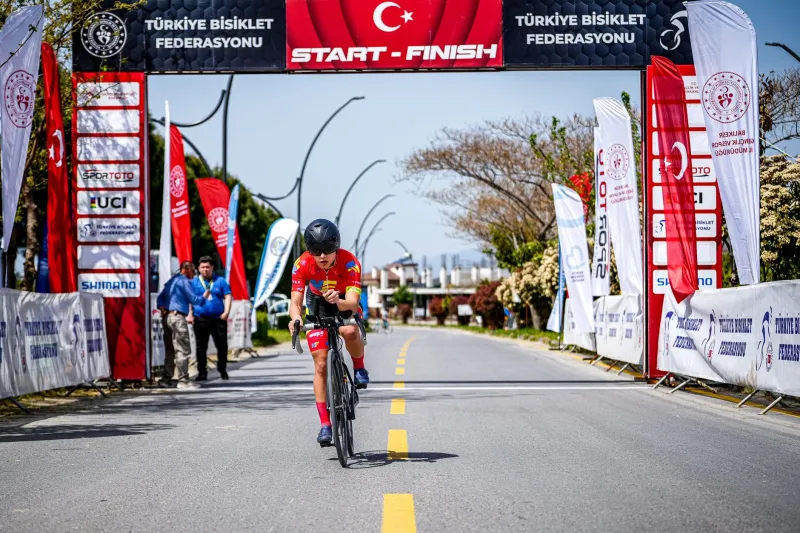
Why Your Fitness Peaks in Baku — And Fades the Moment You Get Home
The Plateau Nobody Talks About
You crushed it in Baku. Your power numbers climbed. Your climbing felt effortless by week two. You came home fired up, ready to dominate your local Tuesday night group ride — and then, slowly, almost without noticing, the gains started to flatten. The legs that felt like pistons on the roads outside Baku started to feel like everyone else's legs again.
This isn't a fluke, and it's not in your head. Well — actually, part of it very much is in your head. But that's exactly the point.
The phenomenon has a name in sports science circles: the exotic training advantage. And if you've ever trained somewhere radically different from your home turf, you already know it's real. Baku just happens to be one of the most potent versions of it on the planet.
What's Actually Happening to Your Body Over There
Let's start with the physiological piece, because it's genuinely fascinating.
Baku sits at the intersection of the Caspian coast and the foothills of the Greater Caucasus. The climate swings hard — dry, hot stretches that force your cardiovascular system to work overtime, followed by cooler mountain air the moment you push inland. Your body doesn't get to settle. It has to keep adapting.
Adaptation is the whole game in endurance sports. When your body knows exactly what's coming — the same 40-mile loop, the same Tuesday headwind, the same gradual climb out of town — it gets efficient. Efficient is great for race day. But efficient is the enemy of adaptation. Your body stops building new capacity because it doesn't need to.
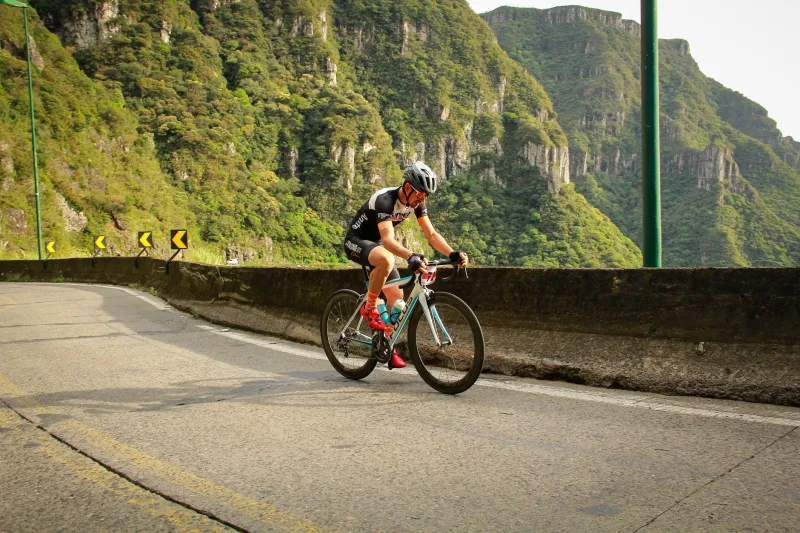
In Baku, that comfort zone gets demolished. The road surfaces change unpredictably. The heat demands better hydration discipline. The elevation shifts on the mountain routes stress your aerobic system in ways that flat coastal riding simply doesn't. Even the wind off the Caspian — and Baku is legendarily windy — forces you to recruit stabilizing muscles you've been ignoring for years.
The result? Forced adaptation across multiple systems simultaneously. That's not something you can replicate just by riding harder on the same roads.
The Psychology Side Is Just as Important
Here's where it gets interesting for the coaches and data nerds in the room.
Research on what's sometimes called "environmental novelty" consistently shows that unfamiliar settings increase focus, attention, and willingness to push into discomfort. When you're navigating roads you don't know in a city that runs on a different rhythm, your brain is engaged in a fundamentally different way than it is during your 200th lap of the local reservoir.
That heightened engagement translates directly to training quality. You're not zoning out. You're not running autopilot. Every pedal stroke has a layer of genuine presence to it because you're actually paying attention to your surroundings.
There's also a motivation spike that comes from being somewhere with real cycling culture and serious competition. Baku has been building its race infrastructure aggressively, and training alongside international-level riders — even just sharing roads with them — raises your perceived standard. You push harder because the environment tells you that harder is normal.
Once you're back in suburban Ohio or the flatlands of Texas, that external pressure disappears. And often, so does a chunk of your drive.
Why the Gains Fade Faster Than They Should
The fitness itself doesn't vanish quickly — physiology doesn't work that fast. What fades first is the behavioral and psychological scaffolding that was holding the fitness together.
Back home, you revert to familiar patterns. Same pre-ride coffee shop, same kit, same group, same roads. These routines feel comfortable because they are comfortable. But comfort, as we've established, is adaptation's nemesis.
Without the novelty stimulus, your training sessions gradually drift back toward the effort levels your body has already mastered. Your perceived exertion recalibrates to your old baseline. You think you're pushing as hard as you were in Baku, but the data tells a different story.
The plateau isn't a failure of fitness. It's a failure of environmental stimulus.
Practical Ways to Recreate the Baku Effect at Home
So what do you actually do about it? A few approaches that work.
Deliberately break your route patterns. This sounds simple, but most cyclists don't do it consistently. If you always ride north out of town, ride south for the next four weeks. If you always start at 7 a.m., try 5:30. Disrupting the rhythm forces your brain back into engagement mode.
Introduce heat training protocols. One of the biggest physiological benefits of training in Baku is heat adaptation. You can replicate a meaningful portion of this with deliberate heat exposure — finishing indoor trainer sessions without a fan, adding a sauna protocol two or three times per week, or scheduling summer rides in the hottest part of the day rather than avoiding it. Heat adaptation improves plasma volume, which is essentially free cardiovascular fitness.
Train with people who are better than you. In Baku, the environment does this automatically. At home, you have to seek it out. Find a faster group ride, enter a local race above your current comfort level, or plan a training weekend with riders who'll push your ceiling.
Use competition as an external anchor. One of the reasons Baku training sticks is that there's always a race or an event on the horizon. Sign up for something that scares you a little before you even book your return flight home. The goal keeps the urgency alive.
Vary your terrain aggressively. If you live somewhere flat, this takes more planning — but it's worth it. Road trip to the Appalachians. Drive to a gravel event two states away. The goal is to put your body in situations it hasn't solved yet.
The Bigger Lesson From the Silk Road
The Silk Road worked for centuries because it forced merchants, travelers, and ideas into contact with the unfamiliar. That collision with the unknown was uncomfortable and demanding — and it produced something extraordinary.
Your training works the same way. Baku is extraordinary as a cycling destination precisely because it refuses to let you settle. The roads, the climate, the culture, the competition — all of it conspires to keep you slightly off-balance in the best possible way.
You can't live in Baku year-round (though honestly, more American cyclists are spending extended time there than you might expect). But you can take the core principle home: the moment your training environment gets predictable, your body stops growing.
Keep it strange. Keep it demanding. And if the plateau gets bad enough — you know where to go.