Suffer Smarter: How the Caucasus Rewires Your Lactate Threshold From the Inside Out
There's a moment every cyclist knows. Legs burning, lungs screaming, that internal voice begging you to back off. Most of us have a ceiling — a point where the suffering wins. But a growing number of American cyclists are coming back from Baku reporting something odd: that ceiling feels higher. Not just mentally. Measurably, physiologically higher.
So what's actually going on?
Lactate Threshold 101 — And Why It's the Number That Actually Matters
Before we get into the Baku-specific stuff, it helps to understand what lactate threshold really means. It's the intensity at which your body starts producing lactate faster than it can clear it. Cross that line, and the clock starts ticking on how long you can hold your effort. Train it up, and you can sustain harder efforts for longer — which is basically the entire sport of cycling in one sentence.
For most American athletes, lactate threshold training happens on the same roads, in the same conditions, with the same group of training partners. It works. But it has limits. Your body adapts to what you throw at it, and eventually, the stimulus stops being a stimulus.
Baku throws something different at you entirely.
The Stressor Stack: What Makes Baku Physiologically Unique
Coach Dmitri Vasev, who has worked with several US-based teams preparing for Silk Road racing, describes Baku's training environment as a "stressor stack" — multiple physiological demands hitting you simultaneously rather than in isolation.
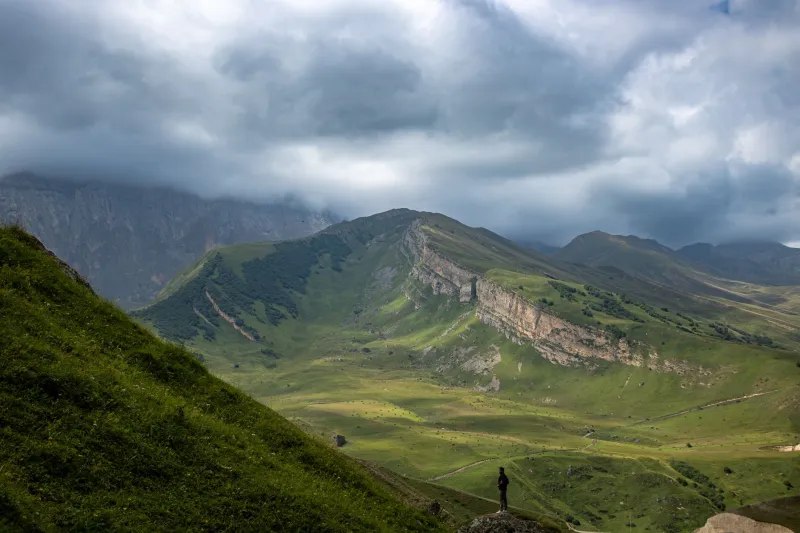
"You've got heat stress from the Caspian climate, mechanical stress from terrain that switches character every thirty minutes, and a moderate altitude effect when you push into the Caucasus foothills," he explains. "None of those things alone would be revolutionary. Together, they force metabolic adaptations that you just can't replicate in a single-variable training environment."
The heat component is worth unpacking. When core temperature rises, your body recruits muscle fibers earlier and less efficiently — which means you hit your lactate threshold at a lower absolute output than you would in cool conditions. That sounds bad. In the short term, it is. But here's the adaptation: your body responds by expanding plasma volume, improving thermoregulation, and — critically — upregulating the enzymes responsible for lactate clearance.
In plain English: Baku makes clearing lactate a survival skill, so your body gets better at it.
What the Science Says About Multi-Stressor Environments
Dr. Alina Marchetti, an exercise physiologist who has consulted with several professional cycling teams, points to research on combined heat and altitude stress as the theoretical backbone for what coaches are observing anecdotally.
"There's solid evidence that heat acclimation alone can boost VO2 max and improve lactate kinetics," she says. "What we're starting to understand is that when you layer altitude exposure on top of heat stress, the adaptations compound. You get greater erythropoietic response — more red blood cells — combined with better lactate shuttle efficiency. That's a powerful combination for any endurance athlete."
The lactate shuttle, for those who haven't gone deep on exercise biochemistry, refers to the process by which lactate produced in working muscles gets transported to other tissues — including the heart — where it's used as fuel. The more efficient your shuttle, the longer you can operate above threshold before the wheels come off.
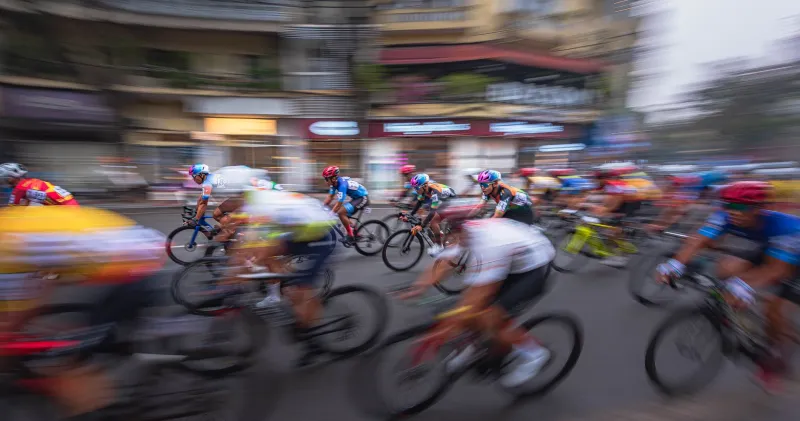
Baku's terrain accelerates that process by forcing repeated threshold efforts rather than sustained ones. The rolling coastal roads push you to threshold, the descent gives partial recovery, and then the next climb does it again. It's involuntary interval training, and it's brutal in the best possible way.
Coaches Are Noticing — And Adjusting Their Programs
Mike Ostrander, a Colorado-based coach who has sent multiple athletes to compete in Azerbaijan, started tracking lactate numbers before and after Baku blocks three seasons ago. What he found surprised him.
"I expected fitness gains. What I didn't expect was the shift in threshold pace relative to perceived effort," he says. "Athletes were putting out more watts at the same RPE after Baku. But more than that, they were willing to go to darker places in races. The suffering tolerance went up in a way that pure fitness numbers don't fully capture."
He's not alone in observing this. Several coaches interviewed for this piece described a qualitative shift in how their athletes approached race-day pain after a Baku training block — a willingness to sit in discomfort that goes beyond what power data can measure.
Part of that is mental, sure. Racing against an international field in an unfamiliar environment forces psychological adaptation alongside the physical kind. But the physiological piece is real too. When your body has been pushed to clear lactate under heat stress, at altitude, on technical terrain, the pain of a domestic criterium or a Gran Fondo climb starts to feel... manageable.
Practical Takeaways for American Cyclists Planning a Baku Block
If you're thinking about incorporating Baku into your training year, a few things are worth knowing before you book the ticket.
Give yourself time to adapt. The first week in Baku is not the week to go hard. Heat acclimatization takes seven to fourteen days, and pushing threshold efforts before that process starts is a recipe for underperformance and potential heat illness. Use the first week for volume at moderate intensity.
Target the foothills deliberately. The coastal roads around Baku are excellent for volume and tempo work, but the lactate threshold adaptations coaches are describing come primarily from the climbing terrain as you push into the Caucasus. If you're there for the physiology, you need to get into the hills.
Track your numbers, but don't live by them. Your power at threshold will likely drop in the first week as your body adjusts. Don't panic. Train by feel and heart rate during acclimation, then reintroduce power targets in weeks two and three.
Plan your return window carefully. The adaptations you build in Baku take time to fully express back home. Most coaches recommend building in at least two weeks of structured training after returning before targeting a key race. That's when the gains tend to show up.
The Bottom Line
The Caucasus doesn't care about your FTP. It doesn't care about your training zones or your carefully periodized plan. It just piles stress on top of stress and waits to see what you're made of. For American cyclists willing to embrace that, the physiological return is real, measurable, and — according to the coaches and scientists paying attention — genuinely hard to replicate anywhere else.
Suffer smarter. Go to Baku.