Numbers Don't Lie: The Surprising Race Time Drops US Cyclists Log After Competing in Baku
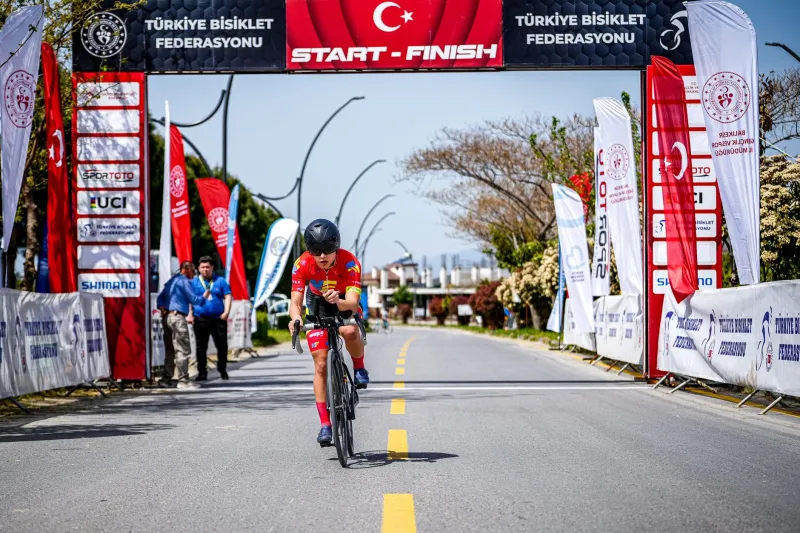
Talk to enough American cyclists who've raced in Baku, and a pattern starts to emerge. It's not just the stories — the heat, the wind, the chaos of racing through a city that feels like nowhere else on earth. It's what happens after they get home. PRs. Podium finishes. Watts they didn't know they had. Coaches scratching their heads in the best possible way.
So what's actually going on? Is it physical adaptation, a mental reset, or something more tactical? We dug into the data — and talked to the people logging it.
The Numbers That Started the Conversation
When Denver-based coach Mara Lindqvist started tracking her athletes' post-trip performance data two years ago, she wasn't expecting a trend. She was just doing her job. But the pattern was hard to miss.
"Across six athletes who competed in Baku over an 18-month window, five of them set personal bests within eight weeks of returning," she says. "That's not a coincidence. That's a signal."
The improvements weren't marginal, either. Time trial splits dropped. Criterium finishing rates went up. Average power output in races — not just in training — climbed by 4 to 7 percent for several riders. One of her athletes, a masters racer from Colorado, knocked nearly two minutes off his best 40K TT time at a regional event in October, just six weeks after racing in Azerbaijan.
Lindqvist is careful not to overstate it. "I'm not saying Baku is magic," she says. "But something is clearly happening there that translates back home in a big way."
What Baku Actually Puts Riders Through
To understand the performance bump, it helps to understand what racing in Baku actually demands. The city sits on the Absheron Peninsula along the Caspian Sea, and its conditions are genuinely unlike anything most American cyclists train in domestically.
The wind is the first thing everyone mentions. Consistent crosswinds and headwinds that shift direction mid-race force riders to make constant micro-decisions about positioning, drafting, and effort distribution. Races that look flat on paper become brutally technical. You can't just hammer — you have to think while you hammer.
Then there's the heat. Baku summers are dry and intense, pushing racers into cardiovascular territory that most US training blocks don't replicate. Add in the urban race circuits — tight corners, variable road surfaces, crowds close to the barriers — and you've got an environment that demands a level of full-system engagement that's rare in domestic competition.
"It's not just hard," says Phoenix-based racer Joel Carver, who competed in Baku last spring. "It's hard in ways you haven't practiced being hard. That's the difference."
The Three Theories Coaches Are Debating
Among the coaches and sports scientists following this trend, there are three main explanations making the rounds — and they're not mutually exclusive.
Theory 1: Physical Stress Adaptation
Racing in Baku's heat and wind creates a physiological stress load that, when recovered from properly, produces measurable fitness gains. Think of it as an unplanned overload block. The body adapts to demands it hasn't faced before, and when athletes return to familiar conditions, those adaptations give them a measurable edge.
Sports physiologist Dana Okafor, who works with several elite US masters cyclists, puts it this way: "When you expose the body to novel stressors — new heat load, new wind resistance demands, new race intensity patterns — and then allow full recovery, you often see a delayed performance spike. It's similar to what we see after altitude camps, but the mechanism is different."
Theory 2: Tactical Recalibration
Baku races are tactically complex in ways that force riders to expand their decision-making repertoire. Riders who've been racing the same US criterium circuits for years suddenly have to adapt — reading different pack dynamics, managing energy in unfamiliar terrain, responding to competitors who race with different strategic instincts.
When they come home, the familiar circuits feel almost slow by comparison. "I came back to a crit I'd done six times and felt like I could see everything happening two moves ahead," Carver says. "The chaos in Baku recalibrated what I thought was fast."
Theory 3: The Confidence Variable
This one's harder to quantify, but coaches keep bringing it up. Racing internationally — especially in a city as distinctive and demanding as Baku — does something to a rider's self-perception. You've handled conditions most of your domestic competitors haven't. You've raced in front of crowds who take the sport seriously in a way that's different from a local circuit race in the Midwest.
Lindqvist calls it "competitive confidence recalibration." "They come back knowing they can handle more than they thought. That shows up in race aggression, in willingness to stay in hard moves longer, in not flinching at the front of a pack."
What the Data Can't Fully Explain
It's worth being honest about the limits here. The sample sizes are still relatively small. Not every rider who goes to Baku comes back with a PR — some come back injured, overtrained, or simply needing a longer recovery window. And isolating the "Baku effect" from other variables — seasonal fitness peaks, improved training loads, normal performance progression — is genuinely difficult.
What coaches like Lindqvist are pushing for is more systematic tracking. "If we could get 30 or 40 athletes logging pre- and post-Baku data with standardized testing protocols, we'd have something really meaningful," she says. "Right now, we're working with strong signals but incomplete data."
Still, the anecdotal weight is building fast enough that it's changing how some coaches structure their athletes' competitive calendars. Baku is no longer just a bucket-list trip or a cool story. It's being built into performance plans as a deliberate stimulus.
How to Make It Work for You
If you're thinking about using a Baku racing experience as a performance tool rather than just an adventure, coaches recommend a few things:
- Build in recovery time. The travel, heat, and race intensity add up. Plan at least two weeks of reduced load after returning before targeting a key domestic race.
- Race, don't just ride. The performance benefits seem tied specifically to competitive exposure, not just training in the region. The race environment is the stimulus.
- Document everything. Track your power data, perceived exertion, and tactical notes during Baku races. That information becomes useful when you're back home trying to replicate what clicked.
- Target a goal race 6–10 weeks post-return. Based on what coaches are observing, the adaptation window seems to peak in that range for most riders.
The Bigger Picture
What's happening here is actually a pretty old idea in a new context. Elite athletes have always sought out environments that break their normal patterns — altitude camps, foreign race circuits, extreme conditions training. Baku is just the latest version of that principle, applied to a city that happens to be genuinely extraordinary for cycling.
The Silk Road didn't become one of history's great trade routes because it was easy. It became great because it demanded something from the people who traveled it — and rewarded them on the other side. American cyclists are figuring out that the same logic applies to racing here.
The clock doesn't lie. And right now, it's telling a pretty interesting story.