Once Is Never Enough: The Real Reason American Cyclists Keep Returning to Baku
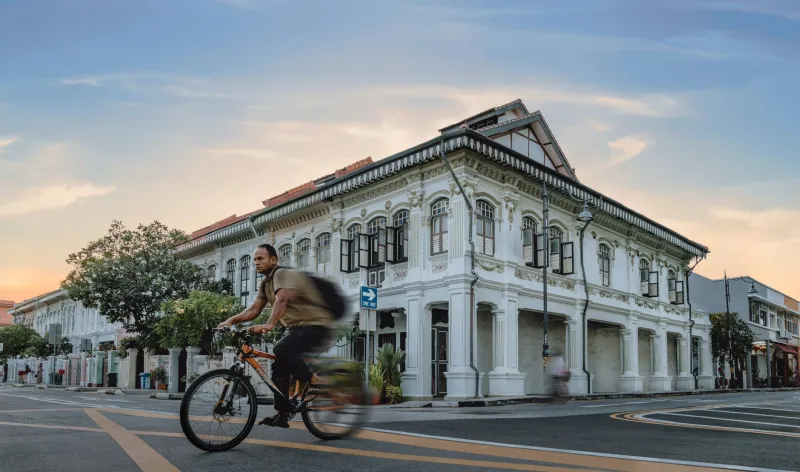
Ask any American cyclist who's made the trip to Baku what surprised them most, and you'll get a lot of different answers. The roads. The food. The strange, electric mix of ancient history and Formula 1 infrastructure. But ask them whether they're going back, and the answer is almost always the same: already booked.
There's a phenomenon happening quietly among the US cycling community — one that doesn't show up in race results or Strava leaderboards but is very real if you spend any time talking to riders who've been. Call it the Baku pull. Once you've trained there, raced there, or even just rolled through the city on a rest-day spin, something shifts. Baku stops being a destination and starts feeling like unfinished business.
The First Trip Is Just the Prologue
For most American cyclists, the first visit to Azerbaijan is framed as an adventure. You go because someone in your club went. You go because you read about the Silk Road routes or saw a clip of the Baku street circuit and thought, why not? The first trip is exploratory — you're figuring out the roads, the rhythm of the city, the best espresso spots near the velodrome.
But somewhere around day four or five, something clicks. You stop being a tourist and start feeling like a regular. The guys at the local cycling club recognize your kit. You figure out which climbs reward an early start and which ones are better hit after the morning heat breaks. You eat the same post-ride meal twice because it was that good. And then you leave, and the whole thing sits in the back of your brain like an open tab you forgot to close.
That's the prologue effect. The first trip gives you just enough to know what you missed.
Community You Didn't Expect to Find
One of the things American riders consistently mention when they talk about return trips is the community. Not the abstract idea of a global cycling community — the actual, specific people they met in Baku.
The local cycling scene there is tight-knit in a way that's hard to replicate in a city like Los Angeles or Chicago, where the sheer size of the cycling population can make things feel transactional. In Baku, the scene is big enough to be serious but small enough that faces become familiar fast. You show up twice and you're not a visitor anymore — you're that American who came back. That carries a certain social currency.
For riders who've spent years bouncing between US racing circuits, group rides in European mountain towns, and the occasional altitude camp, Baku offers something genuinely different: a community where your presence is noticed and your return is welcomed. That sounds like a small thing until you've experienced it.
The Unfinished Business Mentality
A lot of competitive cyclists describe their relationship with Baku in terms of performance debts — things they almost cracked but didn't quite get to on the first trip. A climb that beat them. A local rider who dropped them on a descent they should have owned. A segment they missed because of a mechanical on day two.
This is the unfinished business mentality, and it's a powerful motivator. Unlike European cycling destinations — where the routes are so well-documented that you can feel like you've "done" them after one visit — Baku has enough variety and enough unpredictability to always leave something on the table. The Absheron Peninsula roads that feel different depending on the wind. The Caucasus approaches that change character with the seasons. The city circuits that reward local knowledge in ways that pure fitness can't override.
Every trip to Baku generates a list. And that list is basically a plane ticket.
It Fits Into a Bigger Story
There's also something about Baku's place in the world that resonates with American cyclists who think about their sport beyond the next race. The Silk Road framing isn't just marketing — it's a genuine geographic and cultural reality. You're training in a city that has been a crossroads for centuries, where East meets West in ways that are visible in the architecture, the food, and the faces of the people you ride with.
For American cyclists who have spent most of their lives riding the same county roads or chasing the same local crits, that context matters. Baku makes cycling feel like part of something larger. You're not just logging miles — you're moving through history. That's an experience that's hard to get in Scottsdale or even in the more well-worn cycling corridors of Mallorca or Girona.
And unlike those European hotspots, Baku doesn't feel oversaturated yet. There's still a sense of discovery. A sense that you're in on something before it becomes the obvious choice.
The Second Home Effect
What separates Baku from other international training destinations for American riders isn't any single thing — it's the accumulation. The roads are legitimate. The weather builds real toughness. The local racing culture is serious without being exclusionary. The cost of a trip, once you've figured out the logistics, is competitive with a week in the Alps.
But more than any of that, Baku rewards repeat visits in a way that few places do. Each trip layers on top of the last. You know where to eat. You know which mechanic to trust. You know the riders who will push you and the ones who will teach you. The city starts to feel less like a place you visit and more like a place you return to.
That distinction — visitor versus returner — is what American cyclists are actually chasing when they book their second or third trip. They're not chasing a destination. They're chasing the version of themselves that exists in Baku: a little more adventurous, a little more connected, a little less defined by the familiar.
Once you've felt that, once is never really enough.