The Specialist Trap: How Baku's Terrain Breaks American Cyclists Open
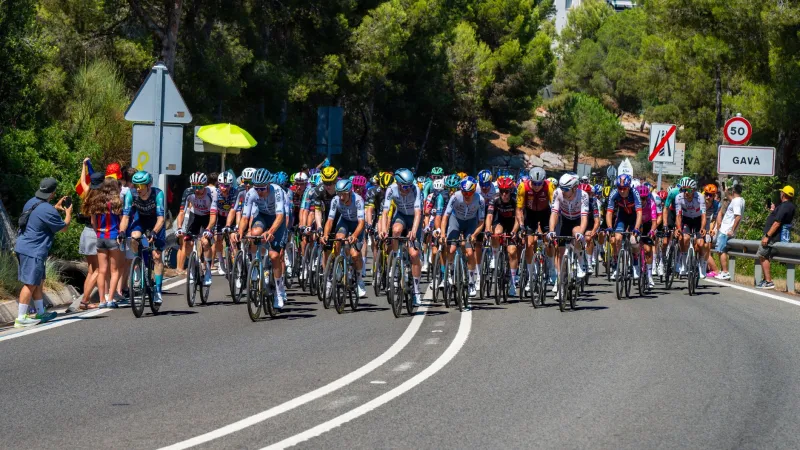
American cycling has a type. The crit racer who can sprint through a technical corner at 35 mph but falls apart on a 10-minute climb. The climber who floats up anything steep but gets shelled the moment the road kicks up gravel. The time trialist who's a machine on smooth tarmac but sketchy the second conditions get technical.
Specialization works. It gets results. It also, eventually, creates a ceiling.
Baku doesn't believe in that ceiling.
A Landscape That Refuses to Let You Be One Thing
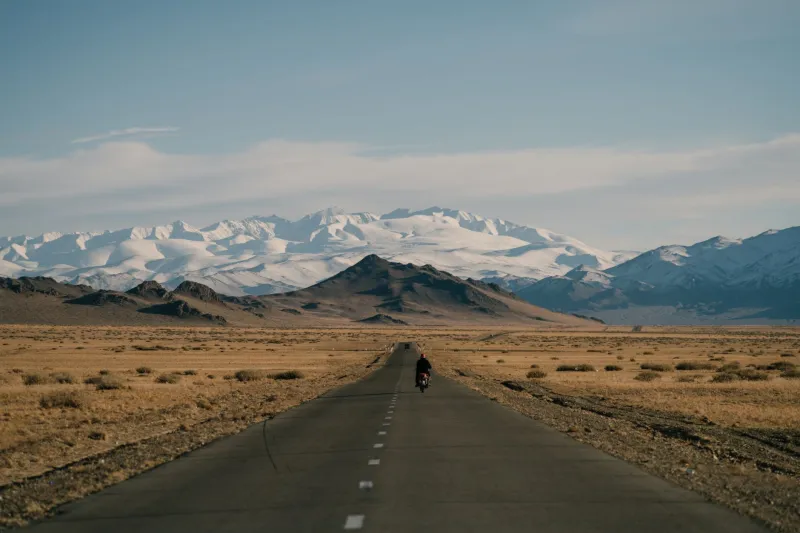
Describing Baku's riding terrain to someone who's never been is genuinely tricky, because it doesn't fit neatly into any single category. Within a single day's ride, you can move from the flat, wind-blasted coastal roads along the Caspian — where aerodynamics and pacing matter as much as fitness — up through technical switchbacks into the Caucasus foothills, across gravel tracks that demand bike handling skills most road cyclists never develop, and back down descents that punish anyone who's been coasting on raw fitness and ignoring technique.
It's not a training ground that rewards one skill set. It's a terrain that demands all of them, often in the same afternoon.
For US cyclists arriving as specialists, the first few days can feel humbling. Then something starts to shift.
From Road Racer to Something Harder to Label
Take the experience of Tyler Brannick, a road racer from the Pacific Northwest who arrived in Azerbaijan primarily as a climber — comfortable on sustained gradients, less comfortable anywhere else. He'd come to Baku for a multi-day race event and figured he'd perform well on the mountain stages and survive the rest.
"I got absolutely worked on the coastal sections," he says, laughing about it now. "I had no idea how to manage wind exposure on those flats, how to position in a group when crosswinds are a factor. I was just getting blown around. It was embarrassing."
But necessity is a fast teacher. By day three, Brannick was paying attention to echelon positioning in a way he'd never bothered with in the Pacific Northwest. By the end of the week, he was making decisions in crosswind scenarios that he says he simply didn't know how to make before.
"I came home and did a local race that had a long flat section I always just kind of survived. This time I actually raced it. My coach noticed immediately."
The Gravel Variable: A Skill American Cyclists Underestimate
One element of Baku's terrain that catches American road cyclists off guard is how frequently paved roads transition to rough or unpacked surfaces — sometimes mid-climb, sometimes on descents where the stakes are higher. Azerbaijan's road network outside the city proper varies wildly in quality, and that variability is a feature, not a bug, for cyclists serious about developing their technical game.
Gravel-specific skills — reading surface texture, adjusting tire pressure mentally based on feel, modulating braking on loose descents — are things that gravel specialists in the US develop intentionally. Road cyclists often don't bother. In Baku, you don't get that choice.
Coach Serena Vauclaire, who has guided several American athletes through Silk Road race preparation, sees the gravel exposure as one of the most underrated aspects of a Baku training block.
"The bike handling gains are real, and they transfer back to road racing in ways people don't anticipate," she says. "A rider who's learned to handle loose terrain with confidence becomes a more relaxed descender on pavement. The nervous energy goes away. And relaxed cyclists are faster cyclists."
What This Means for American Team Talent Development
At the organizational level, a few forward-thinking US cycling programs are starting to incorporate Baku exposure into their development pipelines not just for performance gains but for the versatility it produces.
The traditional American development model tends to identify what a rider is good at early and build around it. You're a sprinter, so we develop your sprint. You're a climber, so we prioritize your climbing. It's efficient in the short term. But it can leave athletes unprepared for the unpredictability of high-level racing, where conditions rarely cooperate with anyone's specialization.
Baku forces a different kind of development. When terrain demands that you be competent at everything, athletes discover capabilities they didn't know they had — and coaches discover things about their riders that a controlled domestic training environment would never reveal.
"I had a rider I thought was a pure puncheur," says Vauclaire. "Baku showed me he was actually a very capable time trialist once he learned to manage effort on flat terrain. We changed his race program completely based on what we saw there. He had a breakthrough season."
The Cultural Dimension of Versatility
There's a less quantifiable element to what Baku does to American cyclists, and it's worth naming. Racing and training in an environment where you're genuinely out of your depth — linguistically, culturally, geographically — produces a kind of adaptability that goes beyond bike handling.
Cyclists who've raced internationally in challenging environments tend to be more composed when races go sideways. They've already had to problem-solve under pressure in unfamiliar situations. A mechanical in a domestic race feels manageable when you've already navigated a mechanical on a gravel climb in the Caucasus without cell service.
The versatility Baku builds isn't just about terrain. It's about becoming a cyclist who can handle whatever gets thrown at them — which, if you think about it, is exactly what the best racers in the world have always been.
Getting the Most Out of Baku's Terrain Variety
If you're planning a trip specifically to develop your versatility, a few practical suggestions:
- Don't just stick to the city routes. The roads immediately around Baku are great for volume, but the real terrain variety kicks in once you push 30-40 kilometers out from the center. Plan at least two or three full-day rides that get you into the foothills.
- Embrace the rough stuff. If you're a pure road cyclist, resist the urge to avoid the unpaved sections. That's where the skill development happens.
- Ride with locals when you can. Azerbaijani cyclists who know the terrain will take you places that don't show up on any Strava segment. Some of those roads will be the most technically demanding riding of your life.
- Keep a skills journal. It sounds corny, but noting what felt difficult and what improved day to day gives you something concrete to bring back to your coach.
The Silk Road didn't become legendary because it was easy. It became legendary because it demanded everything from the people who traveled it. Baku's terrain operates the same way. Show up willing to be a beginner again, and you'll leave as something harder to pigeonhole — and harder to beat.